


The Year I Didn’t Plan For — How an Unexpected Exit Became My Greatest Teacher
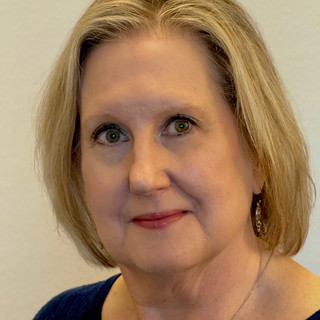
I spent 45 years planning carefully. I had a retirement timeline, a financial strategy, and a clear picture of how the next chapter would begin. Then the year I didn’t plan for arrived — and it changed everything I thought I knew about transitions, resilience, and what it actually takes to build a life after work.

The Year That Wasn’t in the Plan
I want to tell you about a year I did not see coming.
I had one year left before retirement. The plan was solid. The finances were in order. I knew the date. And then two weeks after I buried my mother, my position was eliminated. I went from a carefully constructed runway to no runway at all, almost overnight.
In that first month, I experienced something I did not yet have a name for. It was not just grief for my mother, though that was present and real. It was also disorientation, loss of identity, and the quiet panic of a person who had always had a plan, suddenly having no plan at all. I did not know what to do with a Tuesday morning that belonged entirely to me.
According to the Employee Benefit Research Institute, approximately 40% of retirements occur earlier than planned. That means I was not an exception. I was part of a very large group of people navigating a transition they had not chosen, on a timeline they had not set. What I did not know then, but have come to believe deeply, is that the unplanned year can teach you things the planned one never could.
What the Hard Year Cost
I want to be honest about this, because I think the honest version is the useful one.
The hard year cost me my sense of security. I had spent decades building a professional identity (Director of Quality Informatics, a leader in a national healthcare organization), and that identity was gone in a single conversation. Research from Cambridge University’s Ageing and Society journal confirms what I experienced: unplanned retirement events can happen to anyone regardless of how well they prepared, and the loss of control over the timing and circumstances of the transition is itself a significant source of psychological distress.
It also cost me, for a time, my sense of direction. My days had always been structured around purpose. Meetings, problems to solve, and people who needed my expertise. In the absence of all of that, I found myself moving through my days without the forward momentum that had defined most of my adult life. I had the time I had always wanted. I did not yet know what to do with it.
“The year I didn’t plan for taught me more about myself than the 45 years I did.”
What the Hard Year Gave
Here is what I did not expect: the hard year gave back more than it took.
Not immediately. Not in a tidy, inspirational way. But over time, the year I did not plan for became the year I finally had to ask the questions I had been too busy to ask.
Who am I outside of my work?
What do I actually value, now that no one is watching or measuring?
What does a good day look like when I am the one who gets to decide?
Research from the ASA Generations journal on resilience and retirement found that resilient individuals in forced or unplanned retirement transitions were more likely to reframe the experience as an opportunity rather than a threat — and that this reframing was not a personality trait that some people have and others do not. It is a skill. It can be learned. It develops through the very process of moving through difficulty, not around it.
I did not feel resilient in month one. I felt lost. But by month eight I could see that the lostness had been doing something. It had been clearing space.
For reflection.
For honesty.
For a version of myself that was not defined by a title or a calendar full of obligations.
What Resilience Actually Looks Like in Practice
I think resilience is one of the most misunderstood concepts in the retirement conversation. People talk about it as if it means not struggling. It does not. Research consistently defines resilience not as the absence of difficulty, but as the ability to adapt despite it.
A meta-analysis of 21 studies published on ScienceDirect found a consistent positive relationship between resilience and successful aging, and importantly, that resilience was not fixed. It could be cultivated. The same analysis found no significant difference between retirees in the general population and those in retirement communities, meaning resilience was not dependent on circumstances. It was dependent on the approach.
For me, resilience looked like setting a bedtime and a wake time when every day felt the same. It looked like picking one thing to accomplish each morning so I had something to point to by afternoon. It looked like calling my sister on Wednesdays and showing up to choir even when I did not feel like it. Small things. Repeated consistently. That is what resilience actually looks like from the inside — not grand gestures, but small commitments kept.
What I Would Tell Someone Right Now in the Hard Year
If you are in the year you did not plan for — the disorienting first months, the loss of identity, the quiet panic of an open calendar — here is what I want you to know:
• Your feelings are proportionate. The research on unplanned retirement consistently shows that people who did not choose their exit date experience more intense psychological distress in the early months than those who retired on their own timeline. You are not overreacting. You are having a normal human response to something genuinely hard.
• The hard year is not the whole story. It is the beginning of one. A qualitative study on retirement transitions published in Ageing and Society found that even people who experienced forced or unplanned exits eventually arrived at a life that felt genuinely their own, but that this process required time, active engagement, and a willingness to build rather than simply wait.
• Resilience is not something you either have or do not have. It is something you practice, one small decision at a time. Start with structure. Start with one person. Start with one reason to get out of bed tomorrow morning. That is enough for now.
The Year You Didn’t Plan For Might Be the One That Changes You
I did not choose the year I got. I would not have chosen it. But I would not give it back either. It taught me who I am when nothing external is defining me. It gave me the foundation for everything I am building now.
Whatever year you are in — planned or not — I believe it has something to teach you, too. The question is whether you are willing to let it.
The year you didn’t plan for might be the one that teaches you the most. My book, The Hidden Side of Retirement, is written from inside that year — honest about what it cost, and honest about what it taught me. If you are navigating your own unexpected chapter, I wrote it for you. Available now on Amazon. |
Resources
The following research and sources informed the content of this post:
1. Employee Benefit Research Institute (EBRI)
Retirement Confidence Survey. Employee Benefit Research Institute. ebri.org
2. Vickerstaff, S. & Cox, J. — Ageing and Society / Cambridge University Press
Planning for Uncertainty: Narratives on Retirement Transition Experiences. Ageing and Society, 37(5) (2016). cambridge.org/core
3. Hildon, Z. et al. — ASA Generations: Resilience Through Retirement
Resilience Through Retirement. ASA Generations Journal (2022). generations.asaging.org/resilience-through-retirement
4. ScienceDirect — Resilience and Successful Aging Meta-Analysis (2024)
Resilience and Successful Aging: A Systematic Review and Meta-Analysis. ScienceDirect (2024). doi: 10.1016/j.actpsy.2024.104328
5. PMC / National Library of Medicine — Facilitators of Successful Retirement
Facilitators and Barriers for Successful Retirement: A Qualitative Study. PMC / National Library of Medicine (2023). pmc.ncbi.nlm.nih.gov/articles/PMC10237219



Comments