


From “Cheryl the Director” to Plain Cheryl: Reclaiming Your Identity (Retirement Identity Crisis)
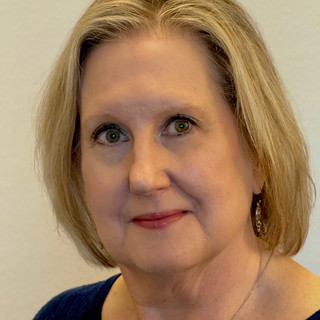
When your job title disappears, it takes more than a paycheck with it. It takes the answer to the most fundamental question you’ll ever be asked: Who are you?

For 45 years, I had an answer.
At parties, at professional events, at my kids’ school functions, at the doctor’s office—any time someone asked: “What do you do?” I had a complete sentence ready. “I’m the Director of Quality Informatics for a national physician group.” It was efficient. It was impressive. It was me.
And then, after a 30-second phone call on an ordinary April morning, it wasn’t.
The job was gone. But the deeper loss—the one I wasn’t prepared for at all—was the identity that had been wrapped around it for nearly five decades. “Cheryl the Director” ceased to exist. And I had absolutely no idea who “plain Cheryl” was supposed to be.
If you’re somewhere in that same fog right now, this post is for you.
When Your Job Becomes Your Self
This isn’t a character flaw. It’s a cultural fact.
In America, we introduce ourselves by what we do. We build our schedules, our social circles, our sense of competence, and our daily purpose around our careers. For people who spent decades in demanding professional roles—especially leadership roles—the fusion between identity and occupation runs deep. The work doesn’t just occupy your time. It occupies your sense of self.
Researchers at the American Psychological Association have documented this extensively. Career identity—the degree to which a person defines themselves through their professional role—is one of the strongest predictors of psychological disruption during retirement. The higher your career identity, the harder the transition.
I had 45 years of career identity. Mine was very high.
The Moment I Understood How Deep It Went
The last day, they cut off my work email, just like that. No warning. I reached for my phone the next morning out of pure habit. Access denied. I sat there staring at the screen, thinking — how does losing an email address feel like losing part of yourself? But it did. That inbox was proof I existed somewhere that mattered.
But it did. Because that email address—that title, that inbox, that calendar full of meetings—was proof that I existed in a way that mattered professionally. It was proof that I was somebody. That I was needed. That I was Cheryl, the Director, not just Cheryl.
When the access disappeared, so did part of that proof.
And here’s what nobody tells you: the grief that follows isn’t really about the job. It’s about the self you built around it.
The Questions That Actually Need Answering
The retirement books all ask, "Do you have enough money?"
The question that kept me awake at 3 AM was different: Am I enough without the title?
Not in a dramatic, philosophical way. In a very practical, Tuesday-morning-at-10 AM way. Because when you’ve spent 45 years with a structured identity—a title, a role, a place in the world—and that structure disappears overnight, you are left with a genuinely disorienting question:
Who am I without my job?
Not who were you. Not who will you be someday. Who are you right now, today, with nothing on your calendar and no title after your name?
That question doesn’t have a fast answer. And that’s okay. But it does need to be asked—and worked through—deliberately.
Why “Find a Hobby” Isn’t the Answer
Well-meaning people will suggest things. Take up golf. Travel more. Volunteer somewhere. Learn to paint.
These aren’t bad suggestions. But they’re surface-level solutions to a deeper structural problem.
The identity crisis isn’t solved by adding activities to your schedule. It’s solved by doing the internal work of figuring out who you actually are when you’re not performing a role. That’s harder. It takes longer. And it can’t be outsourced to a golf club.
Stanford’s Center on Longevity has studied this transition extensively. Their findings consistently show that retirees who thrive in the long term are the ones who build what researchers call “purpose continuity”—a sense of meaning that bridges their professional identity to a new, self-defined one. The people who struggle are the ones who try to fill the calendar without addressing the underlying identity gap.
Filling your days isn’t the same as building a self.
How the Rebuilding Actually Works
There’s no clean three-step process. I wish there were. But there are some places to start.
The first one is harder than it sounds. Separate what you did from who you are.
Write it down if you need to. You were a director, a manager, a nurse, a teacher, or an engineer. That was your role. But underneath the role, what were the qualities you brought to it? Curiosity? Leadership? The ability to make order out of chaos? A drive to help people? Those qualities aren’t in the job description. They’re in you. And they don’t retire.
Then ask what those qualities want to do next. Not what you think you should do. Not what looks impressive on a second-act resume. What genuinely calls to you—even if it’s quiet, even if it’s small, even if nobody would put it on a business card?
For me, it was writing. It was having something to say about the experience I’d just survived. It was the pull toward helping other people navigate what I hadn’t been prepared for. That became Crown Years Media. That became “The Hidden Side of Retirement.” That became a new identity I built from the inside out, instead of the outside in.
It didn’t happen overnight. It took work. But it started with being honest about the question.
Plain Cheryl Turns Out to Be Pretty Interesting
I’ll be honest with you. I didn’t expect to like plain Cheryl very much at first.
Cheryl, the Director, had authority. She had a team. She had a reason to walk into a room with confidence. Plain Cheryl felt unmoored. Purposeless. Like someone had taken the scaffolding down and forgotten to tell the building.
But here’s what I didn’t expect: plain Cheryl has things Cheryl the Director never had time for. She has Wednesday mornings with her sister. She has grandchildren in Austria, and she’s getting to know them over FaceTime in ways that never would have been possible during the work years. She has a book—and a mission—that feels more authentically hers than any job title ever did.
The identity you build in retirement can be richer, more layered, and more truly yours than the one your career handed you.
But you have to be willing to do the work of finding it.
My book, The Hidden Side of Retirement, walks through this identity work in detail—including specific questions to help you separate who you were at work from who you actually are. Because that distinction matters. And you deserve to know the answer.
~ Cheryl
Who are you outside of your job title? Pick up a copy of The Hidden Side of Retirement on Amazon to start working through the identity questions that retirement raises—before, during, or after the transition.
Subscribe to Real Talk with Cheryl for honest conversations about the psychological side of retirement—the part the financial planners don’t cover.
Resources
The following studies and research informed the content in this post:
American Psychological Association. Identity and Well-Being in Career Transitions. Journal of Career Development Review, 2022. https://www.apa.org
Stanford Center on Longevity. Retirement Transition Study. Stanford University, 2023. https://longevity.stanford.edu/retirement-transition-study
Stanford Center on Longevity. Purpose & Daily Meaning Study. Stanford University, 2022. https://longevity.stanford.edu
Boston College Center for Retirement Research. Involuntary Retirement Adjustment Study. CRR, 2021. https://crr.bc.edu
Transamerica Institute. Retirement Transitions Report. Transamerica Center for Retirement Studies, 2023. https://www.transamericainstitute.org
Gallup. Well-Being in Retirement Survey. Gallup Research, 2023. https://www.gallup.com
University of Toronto. Retirement Adjustment Study. Department of Psychology, 2023. https://www.utoronto.ca



Comments